  • Home
  • Weather
  • Climate
  • Ocean & Coasts
  • Fisheries
  • Satellites
  • Research
  • Marine & Aviation
  • Charting
  • Sanctuaries
  • Education
  • News and features
  • Our data
  • Tools & resources
  • About our agency
U.S. flag

An official website of the United States government

Here’s how you know

Dot gov

Official websites use .gov
A .gov website belongs to an official government organization in the United States.

HTTPS

Secure .gov websites use HTTPS
A lock (LockA locked padlock) or https:// means you’ve safely connected to the .gov website. Share sensitive information only on official, secure websites.

Find your local weather
Change location:
  • News
  • Data
  • Tools
  • About
 
 
NOAA mobile logo
NOAA logo National Oceanic and Atmospheric Administration U.S. Department of Commerce


Breadcrumb

  1. Home
NCAI Banner

NOAA Center for Artificial Intelligence (NCAI)

  • NOAA Center for Artificial Intelligence home
  • About
  • Events
    • Events
    • 8th NOAA AI Workshop (2026)
    • 7th NOAA AI Workshop (2025)
    • 6th NOAA AI Workshop (2024)
    • 5th NOAA AI Workshop (2023)
    • 4th NOAA AI Workshop (2022)
    • 3rd NOAA AI Workshop (2021)
  • Research
  • Community
  • Resources
    • Resources
    • Learning Journeys

Connect with us

Subscribe to the NCAI Newsletter offsite link
NCAI Feedback Form offsite link

Connect with us

Subscribe to the NCAI Newsletter offsite link
NCAI Feedback Form offsite link


NOAA's emerging conduit for artificial intelligence (AI) and machine learning (ML) for mission science initiatives


We're exploring the needs and capabilities of the NOAA community. We want to spark conversations, provide space for networking, and encourage information sharing about AI/ML within NOAA and its scientific communities. We welcome your participation in the evolution of NCAI and the development of our Community of Practice.

News and events
NCAI icon
NOAA Center for AI Participates in 2026 Federal AI Forum offsite link

Government and industry leaders gathered at the Federal AI Forum to explore key priorities, emerging opportunities, and critical challenges surrounding artificial intelligence adoption across federal agencies. Speakers highlighted best practices and practical insights for:

  • Advancing agentic AI technology
  • Incorporating AI into cybersecurity operations
  • Expanding pilot initiatives into enterprise-scale deployments
  • Modernizing procurement processes to support new federal AI frameworks and mandates

See: Dr. Stephen W. Bieda, Acting Deputy Director for the NOAA Center for Artificial Intelligence (NCAI) presented at the session: Lightning Rounds: What’s Working? Pilots and Use Cases

NOAA logo
NOAA’s Artificial Intelligence Policy

The release of NOAA’s Artificial Intelligence Policy (NAO 216-128) provides direction, guidelines, and governance to advance responsible artificial intelligence (AI) use and development in support of NOAA mission and business objectives. 

This Administrative Order applies to AI development and use across NOAA, including application development and use for business and administrative workflows, scientific research and writing, code development, and operations. It outlines expectations for AI use grounded in scientific integrity, accountability, transparency, trustworthiness, and risk management. It also establishes NOAA’s AI governance structure, including the NOAA Center for Artificial Intelligence (NCAI) and the NOAA Artificial Intelligence Executive Committee (NAIEC). 

July 31, 2024: Emergency personnel respond to the Park Fire in California. Credit: U.S. Forest Service.
5 Ways NOAA’s Satellites Support Emergency Managers and First Responders
NOAA satellites help predict and detect early threats, track weather events as they happen, and map the aftermath, arming emergency managers and first responders with game-changing intel.
 
NOAA’s new wildfire tool, the Next Generation Fire System, uses artificial intelligence to scan GOES satellite imagery and quickly detect fires down to the neighborhood level. The system also tracks wildfire growth and monitors fire intensity in near real-time, helping first responders prioritize firefighting resources, address the most immediate and urgent threats, and keep firefighters safe.
More AI Events

AI at NOAA: Highlighting Innovation in Practice

Artificial intelligence (AI) can help scientists better understand the environment and its management. NOAA has a long history of using AI in weather forecasting, climate modeling, and environmental monitoring and has established the NOAA Center for Artificial Intelligence to support new and ongoing projects that span from the bottom of the ocean to the outer atmosphere. Learn how we use AI across NOAA in this ESRI StoryMap offsite link, or scroll through it below.


1910
Number of CoP Members
Communities of Practice members can focus on sharing best practices and creating new knowledge to advance AI and machine learning.
Learn More
20
Industry Sectors Supported
NOAA data directly support every sector in the North American Industry Classification System (NAICS) of the U.S. Census Bureau.
Learn More

NOAA AI-related news

Fire crews in yellow safety jackets and helmets sweep through a burned wooded area to extinguish remains of a wildfire.
NOAA's wildfire detection system a game-changer for record-breaking Morrill fire
A collage of weather systems including thunderstorms, rain, heat waves, and fair weather.
NOAA deploys new generation of AI-driven global weather models
A map showing weather systems in the Rockies, Great Plains and East Coast representing the model output of HRRR-CAST.
NOAA Research develops an AI-powered sibling to its flagship weather model
During one of the most active Atlantic hurricane seasons in recent years, three simultaneous hurricanes were captured by the Suomi-NPP satellite on September 8, 2017. The appearance of Katia (left), Irma (center), and Jose (right) was the first such occurrence since 2010. All three hurricanes were threatening land at the time.
Scientists from NOAA and Google team up on new AI hurricane forecast model
 An image of California's Park Fire and smoke taken from space by NOAA's GOES-18 satellite on July 26, 2024. 
NOAA unveils powerful convergence of AI and science with revolutionary Next-Generation Fire System technology
The National Weather Service is asking for public feedback on its new Spanish and Chinese translation services powered by Lilt's AI language model.
NOAA uses artificial intelligence to translate forecasts, warnings into Spanish and Chinese
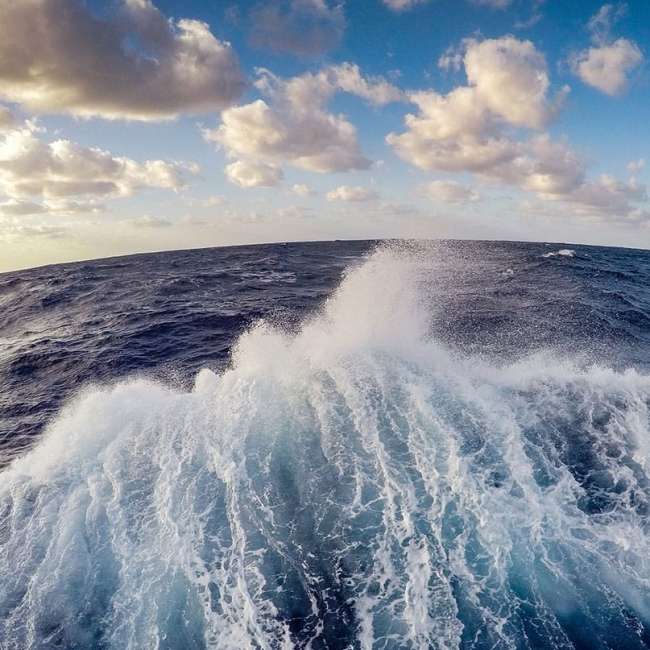
A fish-eye view of the wake of a ship out at sea. Here's an ocean fact: The surface layer of the ocean is teeming with photosynthetic plankton. Though they're invisible to the naked eye, they produce more oxygen than the largest redwood trees.
NOAA, Microsoft team up to advance Climate-Ready Nation
Brain neural network
Can Artificial Intelligence and Machine Learning Assist Climate Scientists?
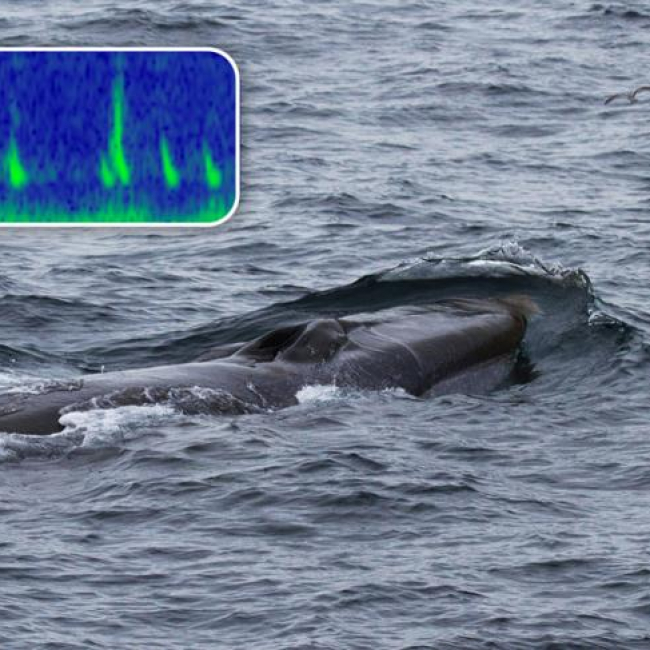
Fin whale and spectrogram of downsweep and backbeat calls
AI speeds delivery of critical information for whale conservation
NCAI icon
NOAA Center for Artificial Intelligence takes root
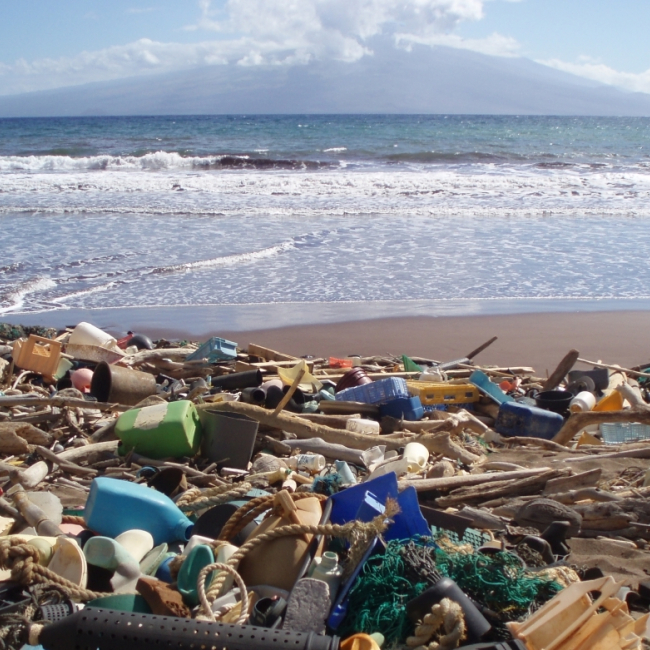
Marine debris washed ashore on the Hawaiian island of Kaho'olawe.
Video: Researchers develop drone-based system to help with marine debris
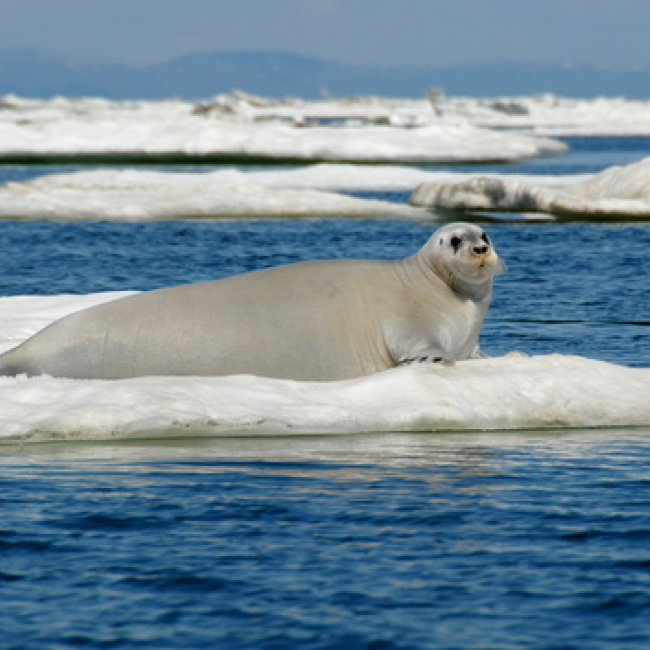
Ice seals — ribbon, ringed, spotted, and bearded (like the one shown here) — are dependent on the Arctic sea ice for pupping, resting and completing their annual molt.
Scientists look to artificial intelligence to find seals and polar bears from the air
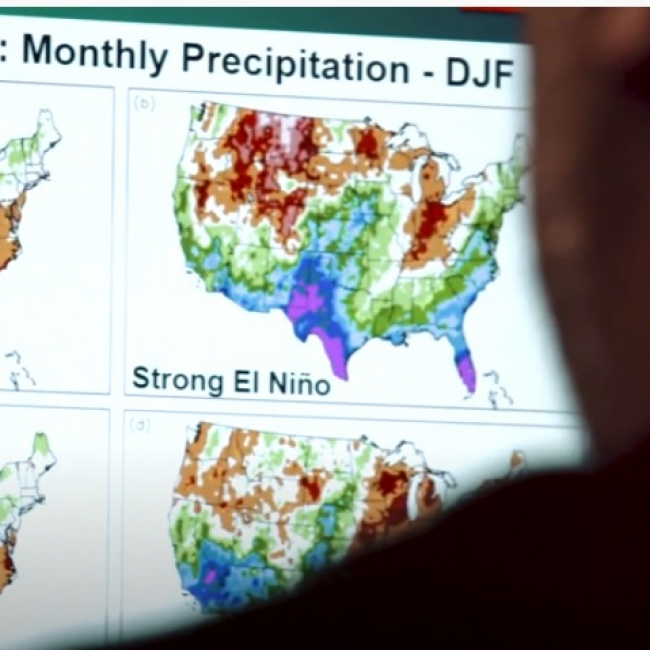
NOAA physical scientist Anthony Arguez reviews El Niño and La Niña winter precipitation Climate Normals on a computer screen at NOAA's National Centers for Environmental Information.
AI agreement to enhance environmental monitoring, weather prediction
Beluga whales seen swimming in Cook Inlet, Alaska.
Scientists using AI to identify endangered beluga whales
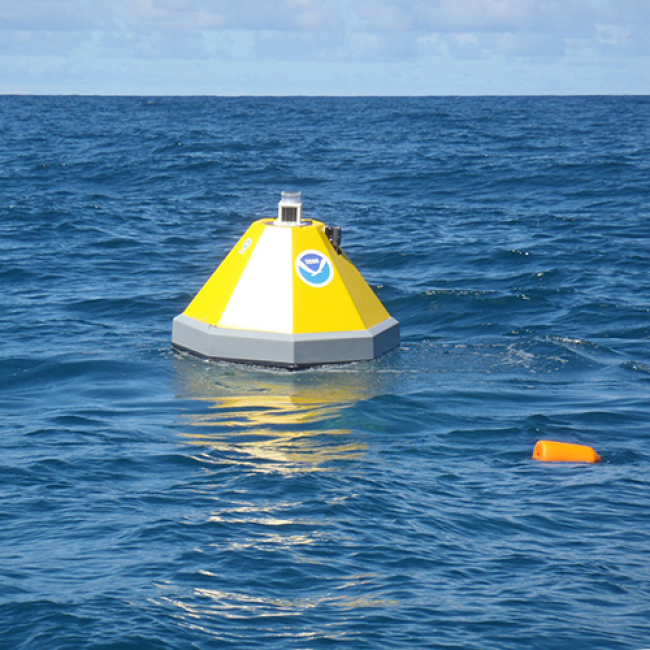
Buoy deployed outside Kaneohe Bay.
Taking data further: Standards create opportunities for 'big data' projects
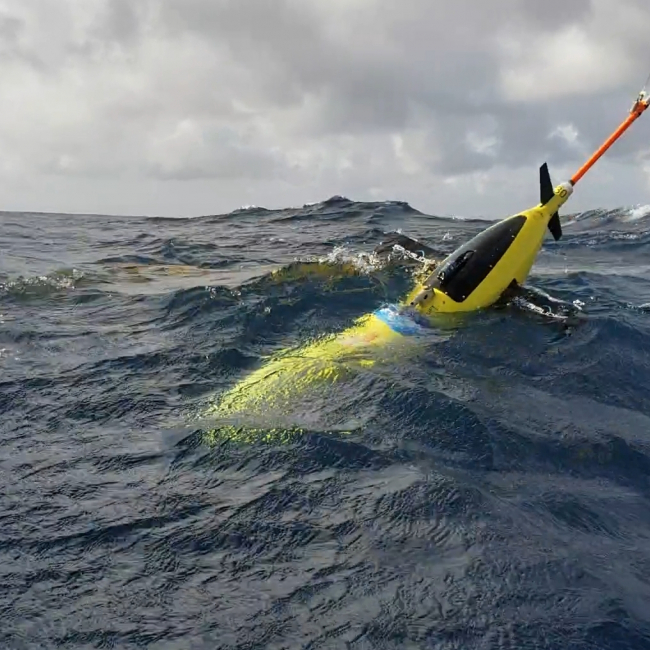
A NOAA ocean glider, seen in waters off the coast of Puerto Rico in July 2018. These robotic, unmanned gliders are equipped with sensors to measure the salt content (salinity) and temperature as they move through the ocean at different depths. The gliders, which can operate in hurricane conditions, collect data during dives down to a half mile below the sea surface, and transmit the data to satellites when they surface.
NOAA finalizes strategies for applying emerging science and technology
laptop showing conferencing windows
NOAA and partner host Hackathon to develop artificial intelligence and computer projects
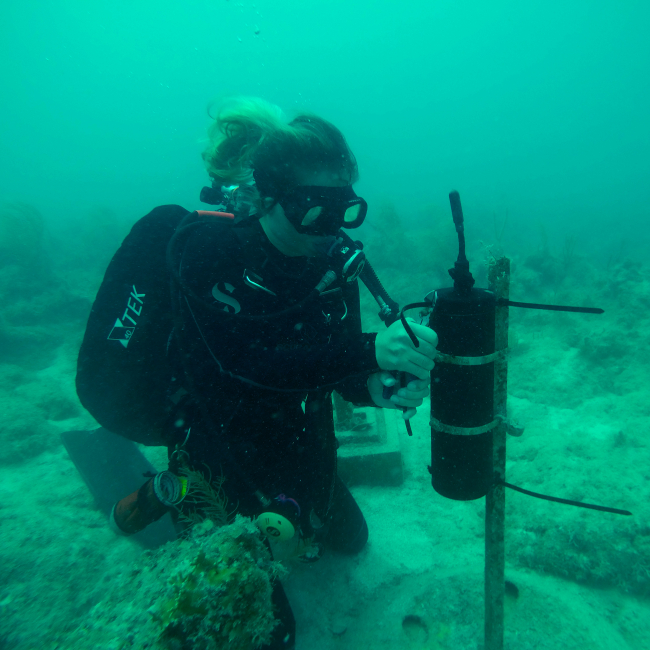
A reseach diver collects data from an underwater sound recorder in Florida Keys National Marine Sanctuary
Scientists train machines to listen for sounds to diagnose health of marine sanctuaries
Welcome to noaa.gov
NOAA announces RFI to unleash power of 'big data'
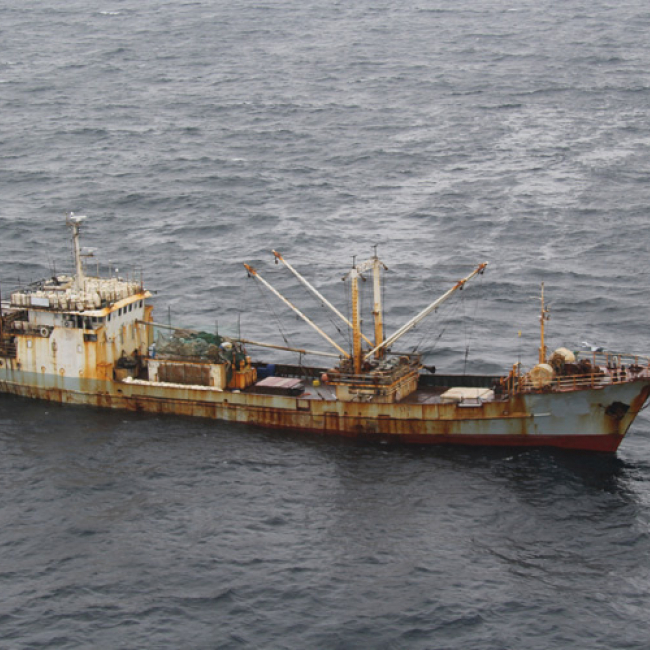
IUU fishing practices hurt law-abiding fishermen, damage the economy, and threaten our food security.
Data initiative sets sights on tackling global ocean challenges

Connect with us

Subscribe to the NCAI Newsletter offsite link
NCAI Feedback Form offsite link

Select Citation Format

Last updated August 18, 2026
Cite this page
Have a comment on this page? Let us know.
NOAA Center for Artificial Intelligence
Join the NCAI Email List offsite link
Feedback offsite link
Email NCAI
NOAA Home
Science. Service. Stewardship.
  • News
  • Tools
  • About
  • Resources for Tribal & Indigenous Communities
  • Bipartisan Infrastructure Law (BIL)
  • Inflation Reduction Act (IRA)
  • Protecting Your Privacy
  • FOIA
  • Information Quality
  • Accessibility
  • Guidance
  • Budget & Performance
  • Disclaimer
  • EEO
  • No-Fear Act
  • USA.gov
  • Ready.gov
  • Employee Check-In
  • Staff Directory
  • Contact Us
  • Need Help?
  • COVID-19 hub for NOAA personnel offsite link
  • Vote.gov
Stay connected to NOAA
NOAA on Twitter NOAA on Facebook NOAA on Instagram NOAA on YouTube
Back to top