

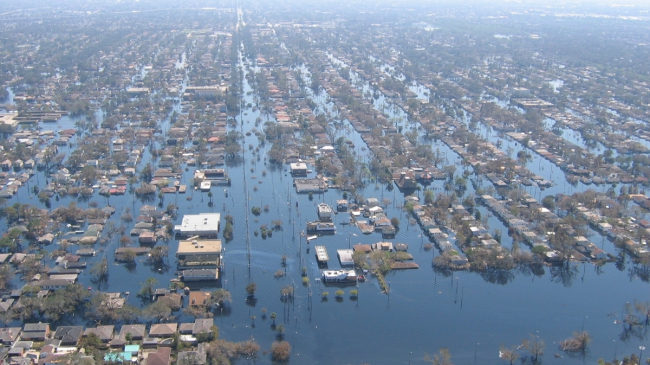
The water in your watershed quenches thirst, grows food, washes clothes, and powers industry. However, too much water can cause raging floods and flush pollutants and soil into rivers and streams. How do we interact with the water in our watershed?


Official websites use .gov
A .gov website belongs to an official government organization in the United States.

Secure .gov websites use HTTPS
A lock () or https:// means you’ve safely connected to the .gov website. Share sensitive information only on official, secure websites.
The water in your watershed quenches thirst, grows food, washes clothes, and powers industry. However, too much water can cause raging floods and flush pollutants and soil into rivers and streams. How do we interact with the water in our watershed?
Water is essential to life on Earth. It has three phases (solid, liquid, and gas). In these three phases, water ties together the major parts of the Earth’s climate system — air, clouds, the ocean, lakes, vegetation, snowpack offsite link, and glaciers. offsite link The water cycle is often taught as a simple, circular cycle of evaporation, condensation, and precipitation. Although this can be a useful model, the reality of the cycle is much more complicated.
The paths and influences of water through Earth’s ecosystems are extremely complex and not completely understood. NOAA is striving to expand understanding of the water cycle at global to local scales to improve our ability to forecast weather, climate, water resources, and ecosystem health.
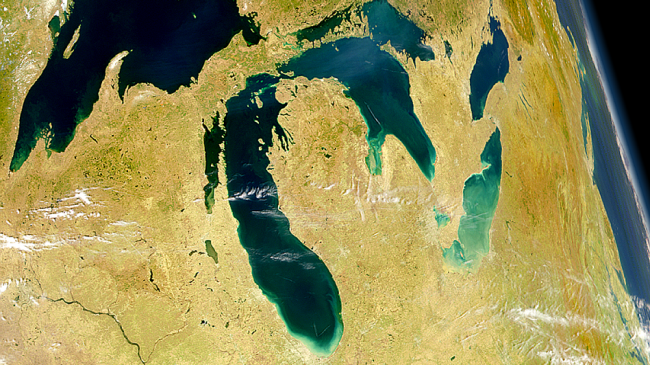
The Great Lakes system includes five large lakes, one small lake, four connecting channels, and the St. Lawrence Seaway. They hold about 90% of the freshwater in the United States and approximately 20% of the world's freshwater supply. Forty million residents of the United States and Canada depend on this system for clean drinking water.